 I review many books on this blog, mostly because I love to read, and I want to share those books that I find compelling or interesting. There are many books written by parents, chronicling their personal journeys of raising autistic children, and I’ve read and enjoyed a lot of them. But, after so many examples, I’m now looking for these first person accounts that bring something a bit different to the reader.
George and Sam, Two Boys, One Family, and Autism , by Charlotte Moore, 2006, is just that book. The author discusses her life with her two autistic son, George and Sam. With two sons, there’s plenty of opportunity to explore how one diagnosis can be both the same and different in two individuals. With the addition of Moore’s youngest, neurotypical, son, Moore has even more room to consider just how autism and personality intersect. One area where Moore excels is in examining how her autistic children play and deal with the world of imagination and fantasy. Her precise attention illuminates just how autistic play can differ from neurotypical play with the same toys. Moore was already an author and journalist before the publication of this book, which is based on her column about her sons. Because of this daily examination, Moore seems to write from a present tense noticing, rather than looking back and trying to remember just how her boys behaved. Throughout the book, Moore maintains her humor and obvious affection for her sons. We don’t just hear about how she enjoys her children, she clearly demonstrates it on every page. The GRASP newsletter, one of the best sources of information on any autism topic, recently published an excerpt from the the newest edition of this book, where Moore revisits her life with her now grown sons. Back in 2008, I posted about working for a boss with Asperger’s. Now, more than three years later, I’m still getting comments on that post, mostly from employees complaining about the difficulties, but also trying to be productive with their boss with Asperger’s.
I like to focus this blog on the positives, and ways to make difficult situations better. The reality is that both neurotypicals and those on the Autism Spectrum are usually trying to do a good job, get along with each other, and communicate effectively. But, differences in expectations, communication style, and social behaviors can mean a lot of frustration on both ends, as well as less than optimal work from the team. Of course, diversity in the workplace is an advantage to any team, and the Autism Spectrum brings strengths as well as difficulties. Work teams can benefit from the goal directed focus, strong work ethic and loyalty, and straightforward approaches common to those on the spectrum. Neurotypicals can learn to adjust their behavior to those on the spectrum, just as people with autism have been having to adjust to neurotypicals all this time. Tha's why I’m asking any adults on the autism spectrum to comment here, or send me an email. How can neurotypicals help make the workplace more autism accepting? For bosses on the spectrum, how can your employees work best to fit your needs and make your organizations most effective? Thanks in advance for your comments!  In an earlier post, I talked about a practical and simple technique for dealing with anxiety. In this post I'd like to expand on some of those ideas.
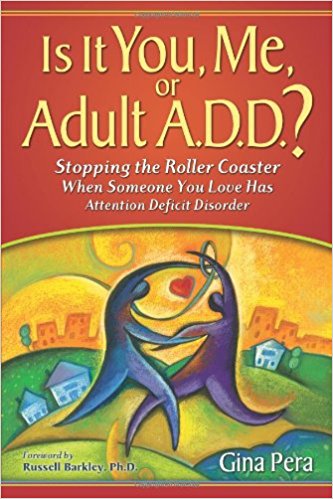
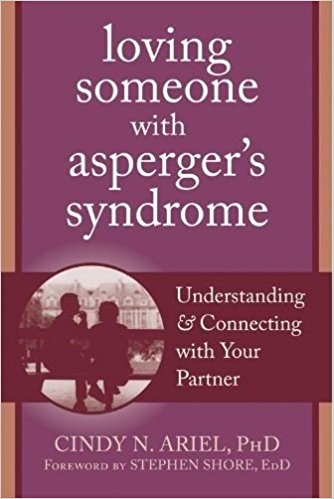
For many individuals on the autism spectrum, anxiety is a constant presence. I find it can be very helpful to view these worries in a more mathematical way. Although many people on the spectrum are very good at math, there's a common belief that math and emotions are two different things. As both an engineer and a therapist, I like to explore the intersection of math and emotion. You don't need to have an advanced understanding of probability theory to use this technique. Simply think about the general odds that something you worried about will actually happen. Usually, worries are quite specific, and are based on the idea that many specific events will have to occur. To think about probability, it's a simple matter to consider how likely each event is. You don't need a great deal of accuracy, but I find it's helpful to have a number, like 1 in 100, rather than a word such as "unlikely" or "rarely". Here's an example. Suppose you're worried about a traffic accident making you late to the airport, so that you miss a flight. If this is a valid worry, then it makes sense to take steps to leave earlier. But, so often, the actual worry is unlikely to happen. That's when looking at probability makes sense. How often is there an accident that causes a delay on the roads? Once per day? How likely is it that the delay will be when you're actually on the road? Once per 2 months? How likely is it that the delay will be more than a few minutes? Although I travel busy Bay Area highways, it's rare that the accidents cause delays of more than a few minutes. Maybe the chances are 1 day in 365 that the delay will be so long I would miss the flight. Does that warrent a great deal of worry? If your worries continue, it can be helpful to do the following tedious yet enlightening exercise. Make a rough estimate of the actual odds of your worry. Create a jar or bowl filled with white pieces of paper, representing everything working out OK, and just enough dark pieces of paper to represent your worry. The chances of one in 1000 could be represented by one piece of blue paper in a sea of 999 pieces of white paper. Although it takes a bit of time, it's not that difficult to cut many scraps of paper by stacking sheets. It's also helpful to see just how long it takes to cut 999 pieces of paper as compared to the one piece of blue paper. I find that the actual exercise of pulling papers from the jar repeatedly helps to illustrate in an experiential way exactly how unlikely many worries are. Then you get to take the same steps I suggested in the earlier post. Manage the emotion of anxiety, and take the practical steps to deal with the issues as well. This is a repost of a popular post that wasn't opening correctly. Rather than spend a lot of time troubleshooting, I'm just moving the post. I remember learning in grad school that the very things that attract a couple to each other in the beginning are the things that draw them apart later on. Perhaps nowhere is this more true than the marriages between neurotypicals and those with Asperger’s. In my last post I discussed Gina Pera's Is It You, Me, or Adult ADD, the classic text on marriage to a partner who has ADHD. In my upcoming posts, I’m going to discuss two other books, Loving Someone With Asperger’s Syndrome , by Cindy N. Ariel, Ph.D. and The Journal of Best Practices , by David Finch. Both of these books cover the topic of marriage between a neurotypical and an individual with Asperger’s or an autism spectrum disorder.
The Asperger’s/neurotypical marriage is probably even more challenging than an ADHD/neurotypical marriage. In both cases, the couple is coping with differences in their basic ways of dealing with the world, and differences in neurobiology. However, Asperger’s also, by definition, involves social differences, and marriage is, at its core, our most social relationship.
There’s been a lot of controversy in the autism community about the tendency to scapegoat the Asperger’s partner for all of the relationship difficulties. Maxine Aston put forth her theory, not backed up in the peer reviewed literature, which she calls Affective Deprivation Disorder, where the neurotypical partner suffers due to emotional deprivation. Although, of course there is truth to the idea that the partner may be suffering, the autistic blogging community understandably had a lot of criticism about the idea of the syndrome. Certainly, in troubled couples, both the neurotypical partner and the ASD partner are suffering. I think a healthier option toward helping these couples might be to step away from blame and expecting one partner to do all the adapting, and instead focus on improving understanding and communication between both partners. After all, neurotypical partners choose their ASD spouses deliberately, often due to the very strengths that come with the ASD diagnosis. The two books I’m next reviewing both can help couples move toward that direction, but in very different ways. (Note, check out my earlier posts for Loving Someone with Asperger's and The Journal of Best Practices.) This is a repost of a popular post that wasn't opening correctly. Rather than spend a lot of time troubleshooting, I'm just moving the post.
A reader of this blog recently questioned, “How do I work successfully for a boss who has Asperger’s?” Of course, people with Asperger’s have always worked, frequently in positions of authority and power. What’s new is the public recognition that Asperger’s and autism exist; that the community doesn’t include just children, but adults as well; and that Asperger’s and autism bring strengths and abilities that management values. At the same time, people with Asperger’s and autism tend to be different than neurotypicals, especially in the ways they communicate and interact socially. (Neurotypicals are those without Asperger’s or autism.) Let me start with a simple warning. Don’t assume that all engineers and scientists have Asperger’s or that all people with Asperger’s or autism are the same. These conditions are tough to diagnose, they have a wide range of characteristics, and individuals with the condition have varying strengths, abilities, and weaknesses. So, whether or not your boss has a formal Asperger’s diagnosis, or even if you’re just guessing about it, pay attention to the individual, and try to adapt your work to what your boss specifically wants. That said, there are typical characteristics of individuals with Asperger’s. Many individuals with Asperger’s struggle with figuring out social situations, like how to manage small talk, or the subtleties of interpersonal hierarchies. Making and maintaining traditional eye contact can be uncomfortable or even overwhelming. There may be extreme sensitivities to things like perfume or fluorescent light. A person with Asperger’s may not organize things in the same way as coworkers. Many individuals with Asperger’s have a strong and intense knowledge and interest in some specific area, often the very area where you are both employed. Their knowledge level and speed of absorbing new material may be well beyond your abilities. Frequently, these individuals are straightforward and direct. The social differences can be the most difficult for neurotypicals to deal with. We neurotypicals value small talk and what may seem like meaningless social interactions. Without them, we can start to question if there’s something wrong, if we’re missing something, or if the boss is unhappy with our performance. Eye contact comes into play here too. Neurotypicals expect eye contact, and it’s very subtly choreographed. Without that typical interaction, we can feel ignored, misunderstood, or disrespected. But, it’s important to remember that the differences due to Asperger’s may mean that we’re reading a lot into a friendly situation. Rather than speak for an individual with Asperger’s, I went to an expert. Joel Smith works as an IT supervisor for a government agency and he’s been diagnosed as being on the Asperger's/autism spectrum. I posed the question to him about how best to work for a boss with Asperger’s, and got this response: “I work best when people working for me will tell me in black and white terms what they need to do their job - I'll miss subtle hints, I'd prefer someone to just come out and say what they are looking for. Similarly with interpersonal issues or conflicts among subordinates - I need to know what is going on, and I might not "just pick up on it". I don't talk differently to upper management or subordinates - I don't "translate" between the languages. I suspect a lot of autistic bosses got where they were not through social networking but rather through ability. So don't feed them bull about their area of expertise.” Thanks for your question, and I hope this has been helpful to you in working productively with your boss. I’d love to get comments from other professionals with Asperger’s or autism about how you’d like to interact with neurotypical coworkers, bosses or employees. Please send me an email, list a trackback, or post a comment. Since so many of my ASD clients enjoy fantasy and roleplay games, I was excited to find Abantey, the Roleplay Workshop in Oakland. Roleplay can be creative, educational and social. Abantey offers a number of different programs, including camps, after school programs for kids from 10 through the teens, and Saturday evening adult groups. The activities are not specifically oriented toward individuals on the spectrum, but they are ASD welcoming, and offer the chance for neurotypicals and ASD individuals to enjoy shared activities. I get a lot of requests specifically looking for adult social activities, and Abantey also offers those! Abantey meets at Dr Comics and Mr Games in Oakland, or they will bring the game to your location. Check them out online for more information.
It's April, and time to finalize those plans for summer camps. I'm a big fan of camp experiences for special needs kids, and there are even some great options for older teens and young adults. Camps give kids a chance to experience social interactions in a relaxed atmosphere, and they have an array of professionals available to counsel and coach real time, as the interactions are going on. At school, teachers and yard duty personnel often try to do social coaching during the school day, but there just isn't the time for it to be a focus. Camps offer that focus. Here in the East Bay there are lots of options, from day camps to sleep away, for interests in horses, camping, technology and film. Older teens can sometimes take a leadership role as a Counselor in Training. I've listed the programs I'm aware at the resource page of my website patriciarobinsonmft.com. Please let me know of any others!
So many of the ASD or ADHD clients who come to see me are spending hours a day online or playing video games. And, they are often dealing with depression and social isolation as well. Of course, as an engineer, I well understand that correlation does not indicate causation But, as a therapist, I recognize that many of my clients have interest in social connections, and they want to have interesting lives, but the effort to do these things is pretty stressful. Video games provide an anxiety management tool, as well as an experience that is both immediately gratifying and at the same time low stress.
Along these lines of thought, The New York Times published an article titled Video Games and the Depressed Teenager. For now, excessive internet and video use is not technically an addiction, although it is a topic of further study in the new DSM 5, which is going to be published this spring. I think it’s important for parents and young adults to consider these results in deciding their standards for online activities in their own homes. Many parents think addition is an appropriate term, because they can see how their own kids and teens behave when they are deprived of their gaming time. For many, less screen time seems to result in calmer and happier moods. Both Alameda and Contra Costa Counties present annual transition fairs, designed to bring together young adults with special needs with the venders and agencies who can help them transtion to adult living situations and employment. Because the fairs only occur once a year, I encourage teens, young adults and their parents to attend these events early, so they can start learning about the services available.
Alameda is holding their 2013 Transition Fair this year on March 16. You can find more information on their Facebook page at http://www.facebook.com/events/411555572244926/. Sensory Overload (Interacting with Autism Project) from Miguel Jiron.
Here is an interesting video on sensory overload from the Interacting with Autism project. I don't have this issue so I'm not an expert, but some people have commented that this is pretty accurate. |
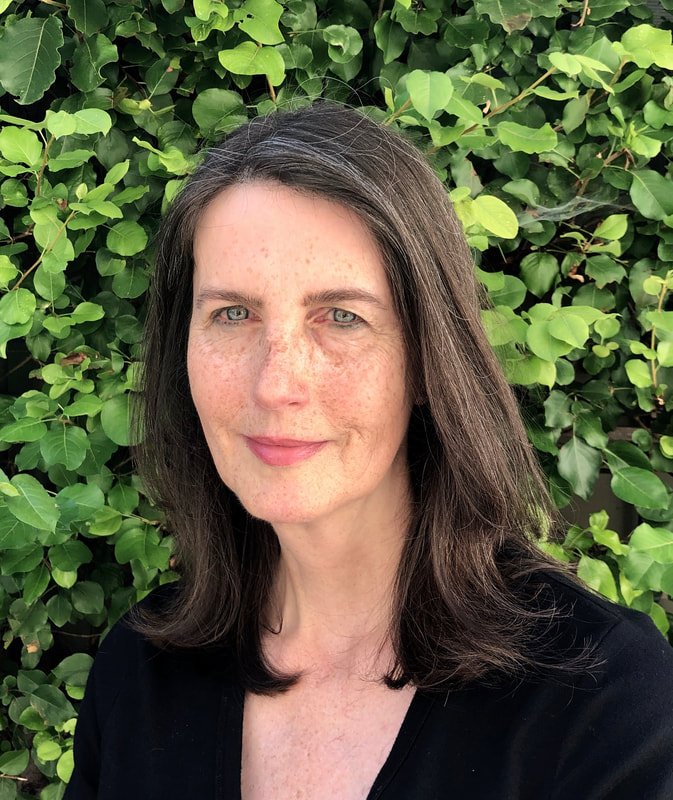
Patricia Robinson MFT
I'm a licensed therapist in Danville, California and a coach for Asperger's and ADHD nationwide. I work with individuals of all ages who have special needs, like Autism Spectrum Disorders, ADD, ADHD, and the family members and partners of special needs individuals. Archives
February 2015
Categories
All
|
 RSS Feed